 ATPenn
Why awards matter more than the table
A ranking tells the top five players how they are doing. It tells everyone else very little. At a club of sixty with twenty regulars, the person in fourteenth place has no reason to care about the table, and the person in forty-second has no reason to look at it at all. Awards are how the other fifty-five get noticed. A small prize given for the right reason keeps a Wednesday-night regular coming through a wet November.
The mistake most organisers make is to treat the awards night as a ceremony about winning. The ones that work are closer to a thank-you with a few honest laughs. This guide is about choosing the prizes, deciding who votes, and avoiding the three or four ways an awards evening goes sour. It applies to tennis, padel and pickleball clubs alike.
Give the table's prizes first, and keep them few
Start with what the numbers can answer without argument: the champion of the season, the best win rate among people who played a reasonable number of games, and the biggest climb. The last one matters most. It rewards the player who started the season in thirtieth and finished in twelfth, which is a much better story than the champion's third title.
Set a minimum number of games before anyone is eligible for win rate. Without it, someone who played two games and won both takes the prize, and the regulars quietly stop believing the awards mean anything. For a club that plays twice a week, 15 games over a season is a fair floor. For a monthly social club, 6.
Three table prizes is the right number. Six dilutes them.
Add prizes the numbers cannot give
Numbers do not see the person who stayed late to put the nets away, or the new member who introduced four friends. Two or three awards for things nobody can measure are what the evening is really about.
- Best newcomer: someone who joined this season and now feels like they have been there for years.
- Club person of the year: the one who made the club better off court.
- Most improved by eye: a player the coaches or the organiser noticed, even if the ranking has not caught up yet.
- A fun one, such as the player who hit the most balls over the fence. Keep it kind.
Decide who chooses before the season starts. A short vote at the last session of the season works for the person prizes. Let the organiser pick the fun one, and never let a candidate know they are nominated.
Match the prize to the club's size
At a four-court club with forty players, a hand-written certificate and a drink at the bar is enough. Bigger clubs add a trophy that is passed on each year with the winner's name on a small plate. Do not spend more than the club can repeat next year. An awards night that was lavish once and then shrank feels like a demotion.
Picture a Friday-night pickleball club with three courts and about thirty players. The organiser ends the season on the last Friday with a ninety-minute mixer, then ten minutes of awards between the last round and the pizza. Four prizes: champion, biggest climb, newcomer and club person. That costs the price of pizza and four framed cards, and next year's night costs exactly the same.
Publish the criteria before the season, not after it
Most arguments about awards are really arguments about the rules, raised late. If the biggest climb is measured from the first table of the season to the last, say so in September. If the vote is by members who played at least five times, say that too. The criteria take a paragraph and save a conversation you do not want to have in the car park.
Keep records during the season, not at the end. Take a screenshot of the table at the start, in the middle and at the close. If scores are entered as games finish, the final numbers are already there on the last night, and nobody has to rebuild them from a group chat.
Choose the moment and keep it short
Hold the awards at the last session of the season, when most members are already there, not at a separate dinner that only the keen ones attend. Ten minutes between the final round and the food is the right length. Anything past fifteen and the room starts checking phones. Read the winners in the order of importance reversed, so the champion comes last, and have the certificates written before you arrive. A pile of blank cards and a pen on the night looks like an afterthought, and the players who got the cards will notice.
Handle the people who did not win
Most of the room will not win anything, and that is fine if you plan for it. Thank people in groups: everyone who played every week, everyone who brought a friend. Say each winner's name and one specific thing they did, not "for being great". Specifics are what people remember, and they are what stop an award from feeling like a favour.
Tie prizes happen. Give both players the award, or look at head-to-head results. Do not toss a coin on the night.
When awards are the wrong move
If your club has fewer than a dozen players who see each other every week, a formal awards night is too much. A message in the group saying "Sam was the most improved this year, buy him a coffee" does more good. The same is true if the season had a bad moment, a dispute or a falling-out, and an awards night would only reopen it. Wait a season and start smaller.
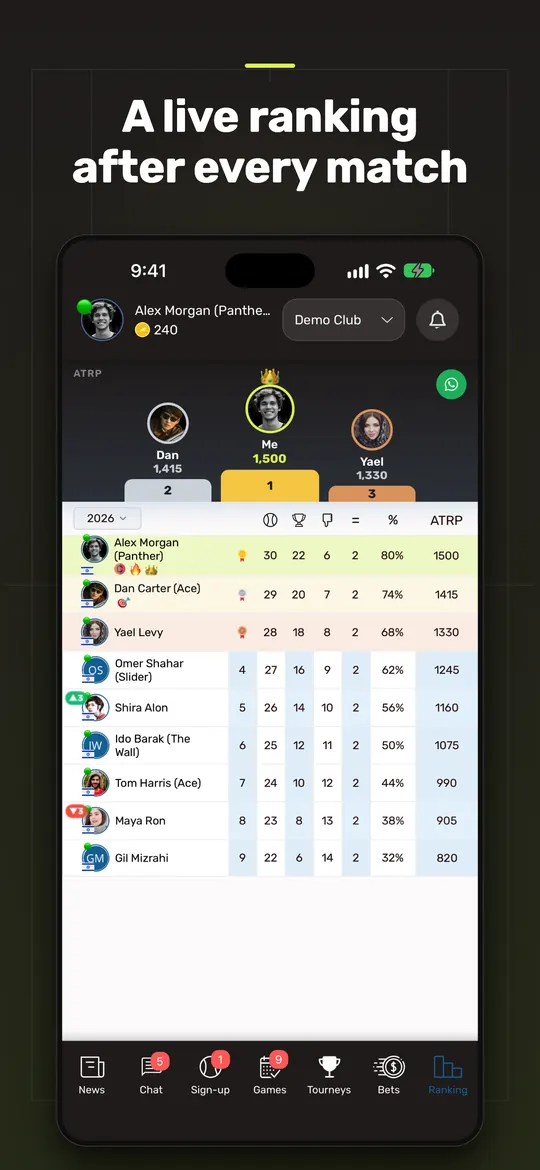
Awards also backfire when the ranking underneath is not trusted. If players think the table is wrong, fix that first, using the club ladder guide. How ATPenn gives out its own monthly awards and keeps the table is described below and on the page for clubs, and you can get the app to try it with your own players.